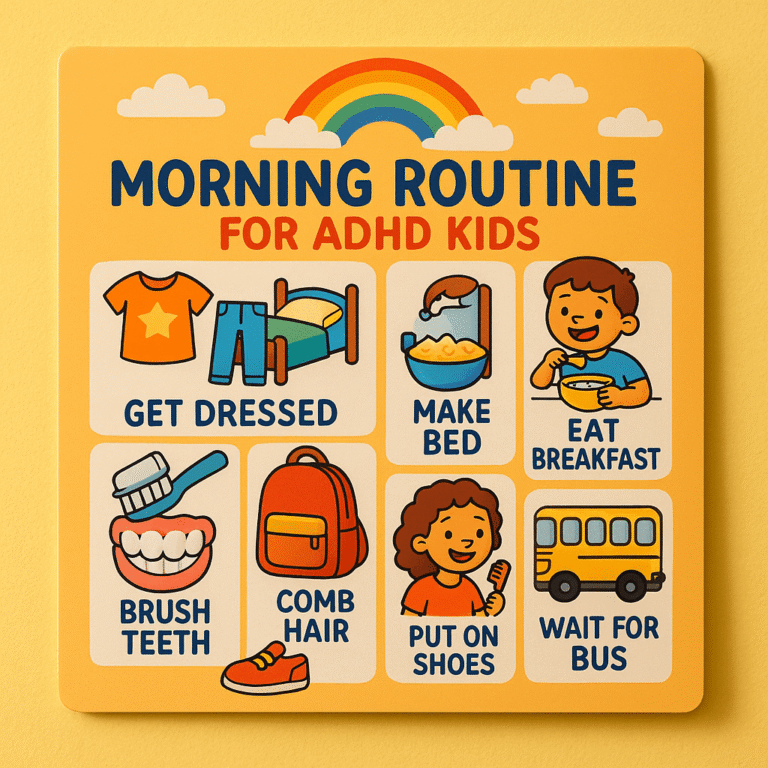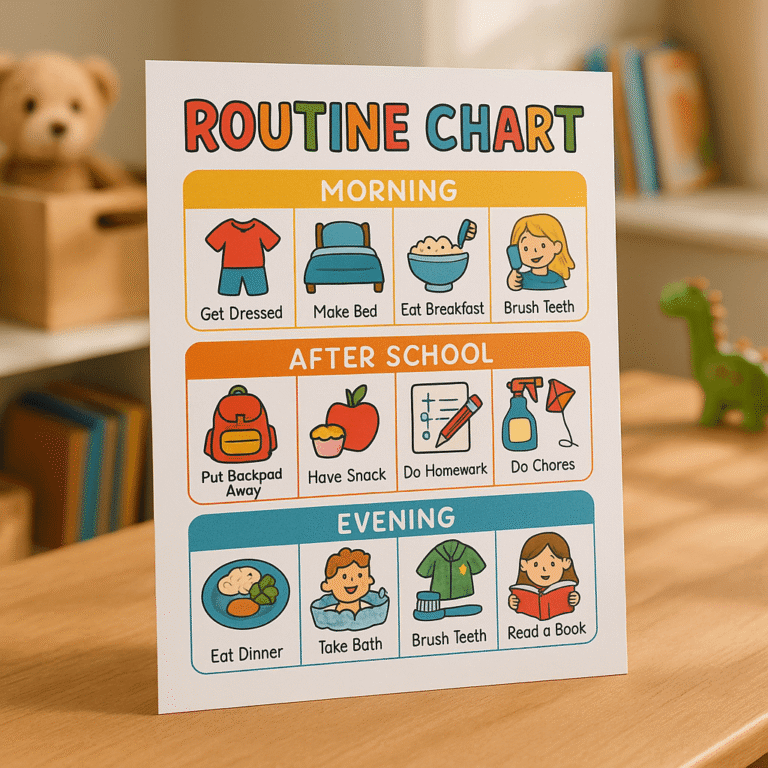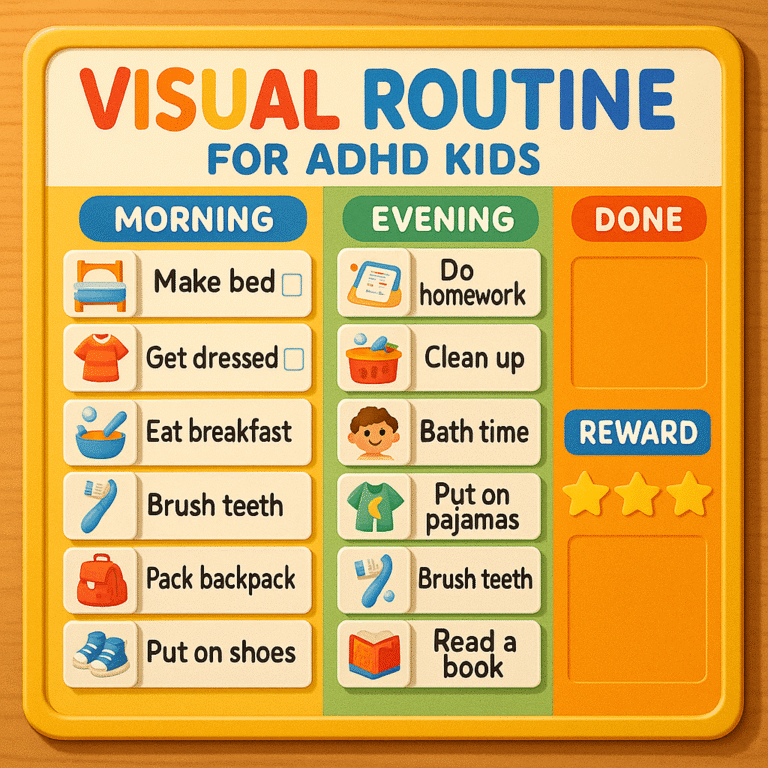

Children with ADHD often struggle with task transitions, time awareness, and concentration. A visual schedule for kids with ADHD creates structure and clarity, making daily routines more manageable and less stressful for both kids and parents.
In this post, you’ll learn why visual schedules work and how to use them effectively at home.
? Why Visual Schedules Work for ADHD Kids
- Reduce anxiety by clearly showing what comes next
- Improve transitions between activities
- Foster independence with step-by-step visuals
- Cut down verbal reminders and conflicts
- Build consistency in daily life
Research shows that visual supports significantly help children with ADHD to complete tasks and regulate emotions
?? How to Use a Visual Schedule for Kids with ADHD
1. Break the Day Into Chunks
- Morning routine
- Study/play time
- Meals and breaks
- Evening routine
? Start with just 3?4 steps to avoid overwhelm.
2. Select Your Format
- Moveable cards with magnets or Velcro
- Horizontal strip or vertical checklist
- Laminated boards with dry-erase options
? Position it in a central, visible space like the fridge or a child?s desk.
3. Add Pictures or Icons
- Use clipart or photos of your child doing each task
- Color code for better visual association
? Visual clarity reduces confusion and enhances predictability.
4. Review Daily
- Start of day: ?Here?s our plan.?
- End of day: ?Great job! Let?s check off each part.?
? Routine becomes self-guided with practice.
? Printable Visual Schedules to Get You Started
Our ADHD-friendly printables include:
- Daily routine charts
- Morning/evening cards
- Weekly schedule sheets
- Editable Canva templates
? Explore Visual Schedule Printables
For expert guidance on visual schedules with ADHD, see this ADDitude article:
? Daily Schedules for Kids with ADHD
? Final Thought
A visual schedule for kids with ADHD?can transform chaos into a?routine. With consistent use, you’ll help your child gain independence, reduce anxiety, and succeed in daily tasks. Small tools, big impact! ?